
Game Development is no longer limited to gaming companies. Today, startups, enterprises, educational institutions, marketing agencies, and global brands are investing in games to engage users, improve customer retention, educate audiences, and create memorable digital experiences.
Whether you’re planning to build a mobile game, an educational game, a branded marketing game, or an immersive AR/VR experience, one question comes up before anything else:
How much does Game Development cost in India?
The answer isn’t as simple as a single number.
A basic 2D game can cost just a few lakh rupees, while a feature-rich multiplayer game with custom artwork, backend infrastructure, and live events can require an investment of over ₹1 crore. The difference lies in the scope of the project, the technologies involved, the number of platforms you want to support, and the level of quality you’re aiming for.
India has become one of the world’s leading destinations for game development because it offers highly skilled developers, artists, designers, and technical specialists at competitive pricing. Businesses from around the globe choose Indian game development companies to build everything from casual mobile games to enterprise training simulations and branded gaming experiences.
In this guide, we’ll explain exactly what influences game development costs in India, provide realistic pricing estimates for different types of games, highlight hidden expenses that businesses often overlook, and share practical tips to help you maximize your investment.
Table Of Contents
- How Much Does Game Development Cost in India?
- At a Glance: Estimated Game Development Costs
- Why There’s No Fixed Price for Game Development
- 7 Factors That Affect Game Development Costs
- Estimated Cost by Game Type
- Game Development Cost Breakdown
- Freelancer vs. Game Development Company
- Hidden Costs Businesses Often Miss
- How to Reduce Game Development Costs
- Choosing the Right Game Development Company
- Conclusion
- Frequently Asked Questions
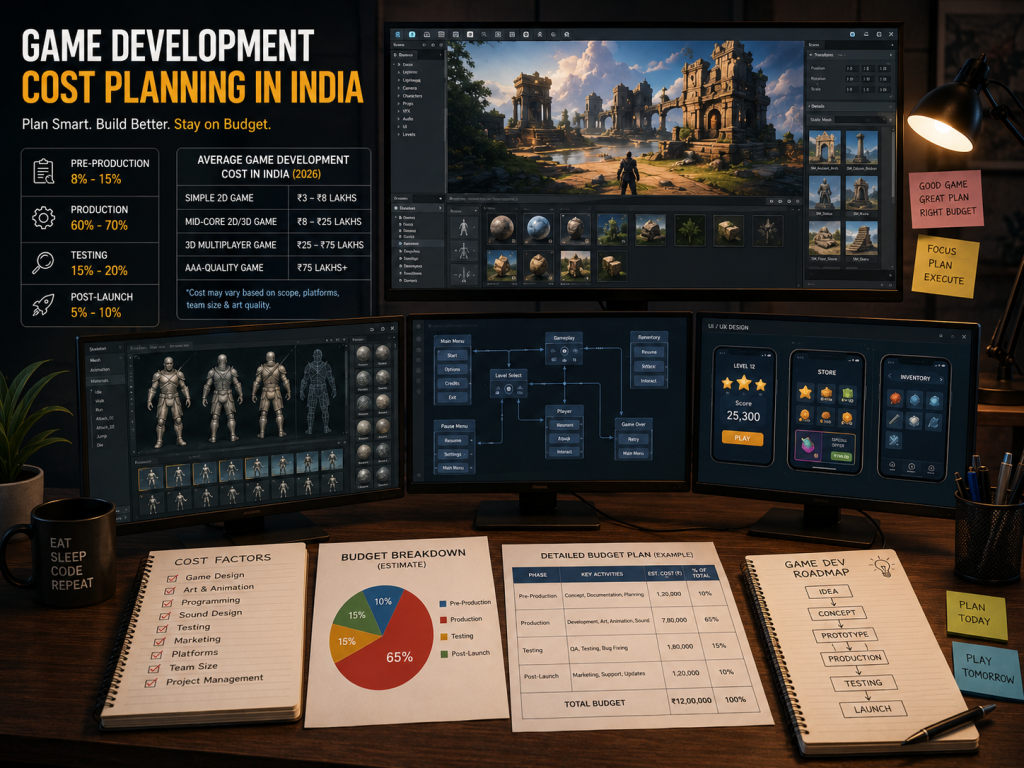
At a Glance: Estimated Game Development Cost in India (2026)
| Game Type | Estimated Cost | Development Timeline |
|---|---|---|
|
Hyper Casual Game |
₹2–8 Lakhs |
1–3 Months |
|
Casual Mobile Game |
₹5–20 Lakhs |
2–5 Months |
|
2D Game |
₹8–30 Lakhs |
3–6 Months |
|
3D Game |
₹20–80 Lakhs+ |
6–12 Months |
|
Multiplayer Game |
₹30 Lakhs–₹1 Crore+ |
8–15 Months |
|
Educational Game |
₹10–40 Lakhs |
3–8 Months |
|
AR/VR Game |
₹15–75 Lakhs+ |
4–10 Months |
|
Branded Marketing Game |
Depends on Scope |
2–6 Months |
Note: These are indicative price ranges based on project scope, complexity, platforms, technologies, and team size. Actual costs may vary depending on your specific requirements.
Why There's No Fixed Price for Game Development
Unlike buying a software subscription or a pre-built application, game development is a highly customized process.
Think of it like building a house.
Two houses may have the same number of rooms, but the construction cost can vary dramatically depending on the location, materials, design, interior finishes, and amenities. The same principle applies to game development.
Every game has unique requirements. Some projects need only basic gameplay and simple graphics, while others require advanced physics, multiplayer functionality, custom character animation, AI-driven NPCs, or cloud-based infrastructure. These variables directly influence the time, expertise, and resources required to complete the project.
Additionally, businesses have different goals. A branded marketing game designed for customer engagement may prioritize quick development and cross-platform accessibility, whereas a competitive multiplayer title demands significantly more engineering, testing, and ongoing support.
Understanding these variables is essential before setting a realistic budget.
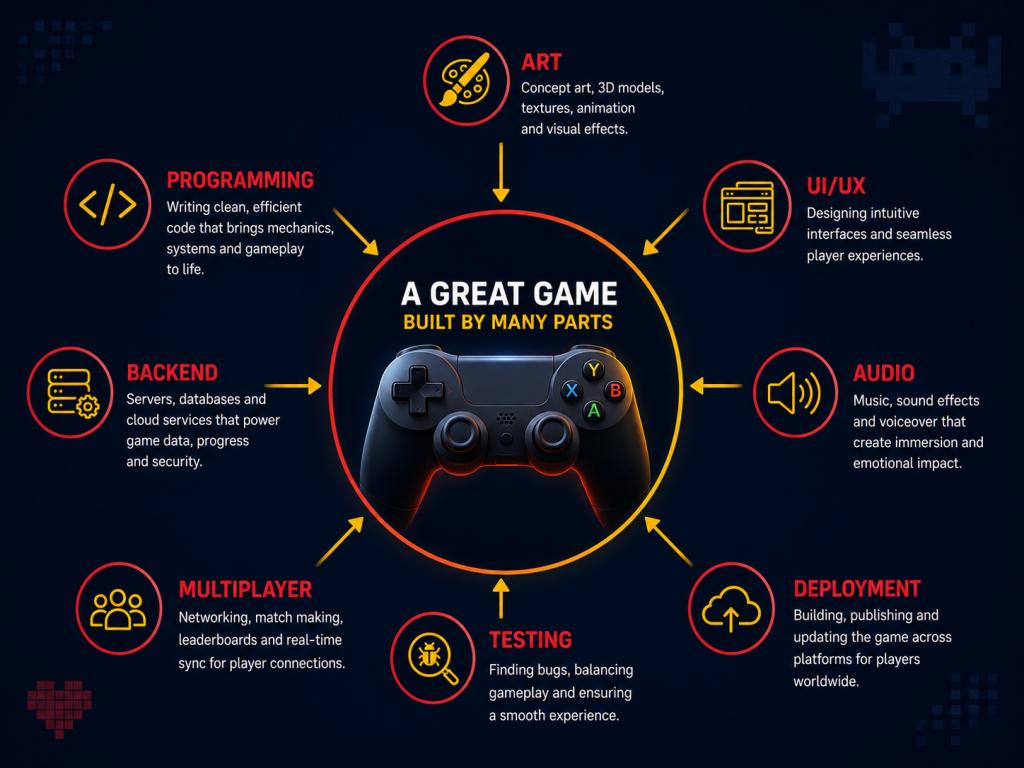
7 Factors That Affect Game Development Cost
1. Type of Game
The type of game you want to build has the biggest impact on cost.
For example, a simple hyper-casual game with minimal mechanics can be completed much faster than a role-playing game (RPG) or an open-world adventure. Multiplayer games, simulation games, educational platforms, and branded games all require different levels of planning, programming, and content creation.
Before requesting a quote, clearly define the purpose of your game. Is it meant for entertainment, education, marketing, employee training, or customer engagement? A well-defined objective helps developers recommend the most efficient solution and prevents unnecessary features from inflating the budget.
2. Platform Selection
Developing for Android alone is generally more affordable than launching simultaneously on Android, iOS, Web, PC, and consoles.
Each additional platform requires optimization, testing, and compatibility adjustments, increasing both development time and overall cost.
Businesses often begin with a single platform to validate the idea before expanding to additional devices.
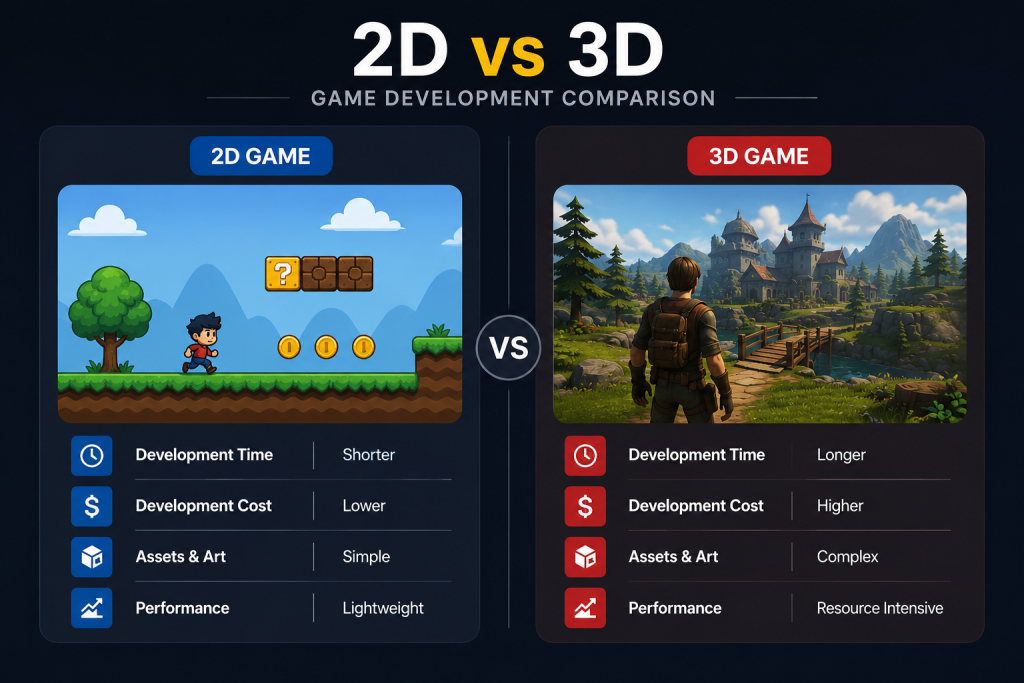
3. Art Style and Animation
Visual design plays a major role in determining development costs.
Games that use basic 2D graphics require less production time than games featuring high-quality 3D environments, realistic character models, cinematic animations, or motion capture.
Custom artwork also increases the budget compared to using pre-built assets, but it offers stronger branding and a unique visual identity.
4. Features and Gameplay Mechanics
Every feature you add increases development time.
Some common features include:
- User accounts
- Leaderboards
- In-app purchases
- Daily rewards
- Achievements
- AI opponents
- Social sharing
- Push notifications
- Cloud save
- Live events
While these features improve user engagement, they also require additional programming, testing, and maintenance.
A good practice is to launch with a Minimum Viable Product (MVP) that includes essential features and expand it later based on user feedback.
5. Multiplayer and Backend Infrastructure
Single-player games are generally less expensive because they don’t require servers or real-time communication between players.
Multiplayer games, however, need backend infrastructure, matchmaking systems, databases, user authentication, security measures, synchronization, and server maintenance. These systems significantly increase both development and operational costs.
6. Quality Assurance and Testing
Testing is often underestimated, yet it’s one of the most important stages of game development.
Games must be tested across multiple devices, screen sizes, operating systems, and network conditions to ensure smooth performance. Functional testing, performance testing, usability testing, compatibility testing, and bug fixing all contribute to delivering a polished final product.
Skipping proper testing may reduce initial costs but often leads to expensive fixes after launch.
7. Post-Launch Support and Maintenance
Game development doesn’t end when the game is published.
Most successful games continue to receive updates, bug fixes, security improvements, new content, seasonal events, and performance optimizations.
Planning for ongoing maintenance from the beginning helps ensure a better user experience and extends the lifespan of your game.
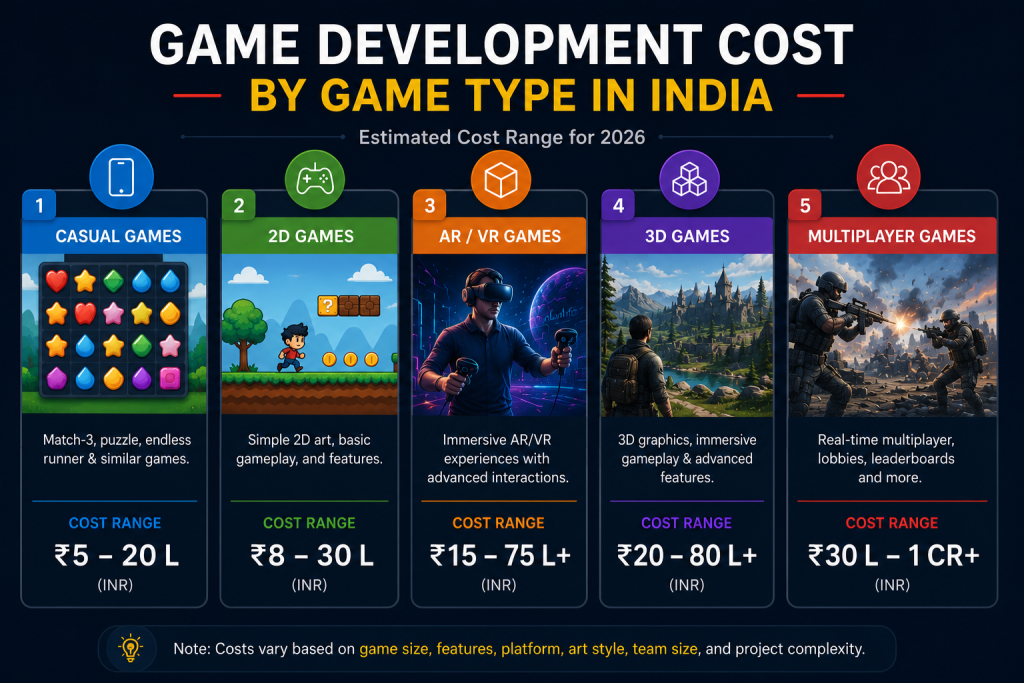
Estimated Game Development Cost by Game Type
Although every project is unique, understanding the typical price range for different categories of games can help you set realistic expectations.
| Game Type | Estimated Cost | Best For |
|---|---|---|
|
Hyper Casual Game |
₹2–8 Lakhs |
Startups, MVPs |
|
Casual Mobile Game |
₹5–20 Lakhs |
Entertainment, D2C brands |
|
2D Game |
₹8–30 Lakhs |
Education, Indie games |
|
3D Game |
₹20–80 Lakhs+ |
Premium gaming experiences |
|
Multiplayer Game |
₹30 Lakhs–₹1 Crore+ |
Online communities, esports |
|
Educational Game |
₹10–40 Lakhs |
Schools, EdTech, NGOs |
|
AR/VR Game |
₹15–75 Lakhs+ |
Training, Real Estate, Healthcare |
|
Branded Marketing Game |
Depends on Scope |
Customer engagement & campaigns |
A branded game, for example, doesn’t always require AAA-level complexity. Many successful marketing campaigns use lightweight HTML5 or mobile games that are quick to play, easy to share, and highly engaging. The investment depends on campaign objectives, gameplay mechanics, integrations, and the level of customization required.
Conclusion
Game development is an investment in creating engaging digital experiences, not just software.
Whether you’re building a casual mobile game, an educational platform, a multiplayer experience, or a branded marketing game, understanding the factors that influence development costs helps you make informed decisions and plan your budget effectively.
Rather than focusing solely on finding the lowest quote, consider the long-term value of quality development, reliable support, and a scalable solution. A well-planned game can continue delivering engagement, customer loyalty, and business value long after its initial launch.
By defining your goals clearly, prioritizing essential features, and partnering with an experienced game development team, you can build a successful product while making the most of your investment.
Looking to Build a Game?
Whether you’re planning a branded game, an educational experience, a mobile game, or a custom interactive solution, Myy Hashstash helps businesses turn ideas into engaging digital experiences.
From concept and design to development, testing, and post-launch support, our team builds games that are designed to entertain, educate, and deliver measurable business results.
Ready to discuss your game idea? Get in touch with our team today and let’s build something players will remember.
Frequently Asked Questions
Q1. How much does it cost to develop a mobile game in India?
The cost typically ranges from ₹2 lakh to ₹50 lakh or more, depending on the game’s complexity, features, artwork, and supported platforms.
Q2. Why do game development quotes vary so much?
Every project has unique requirements. Gameplay mechanics, graphics, multiplayer functionality, backend systems, timelines, and team experience all influence the final cost.
Q3. Which game engine is commonly used?
Popular game engines include Unity, Unreal Engine, Godot, and custom proprietary engines, depending on project requirements.
Q4. How long does game development take?
Simple games may take 1–3 months, while complex multiplayer or 3D projects can take 6–15 months or longer.
Q5. Can businesses build games for marketing purposes?
Yes. Branded games are increasingly used to improve customer engagement, increase brand recall, generate leads, and create memorable campaign experiences.