
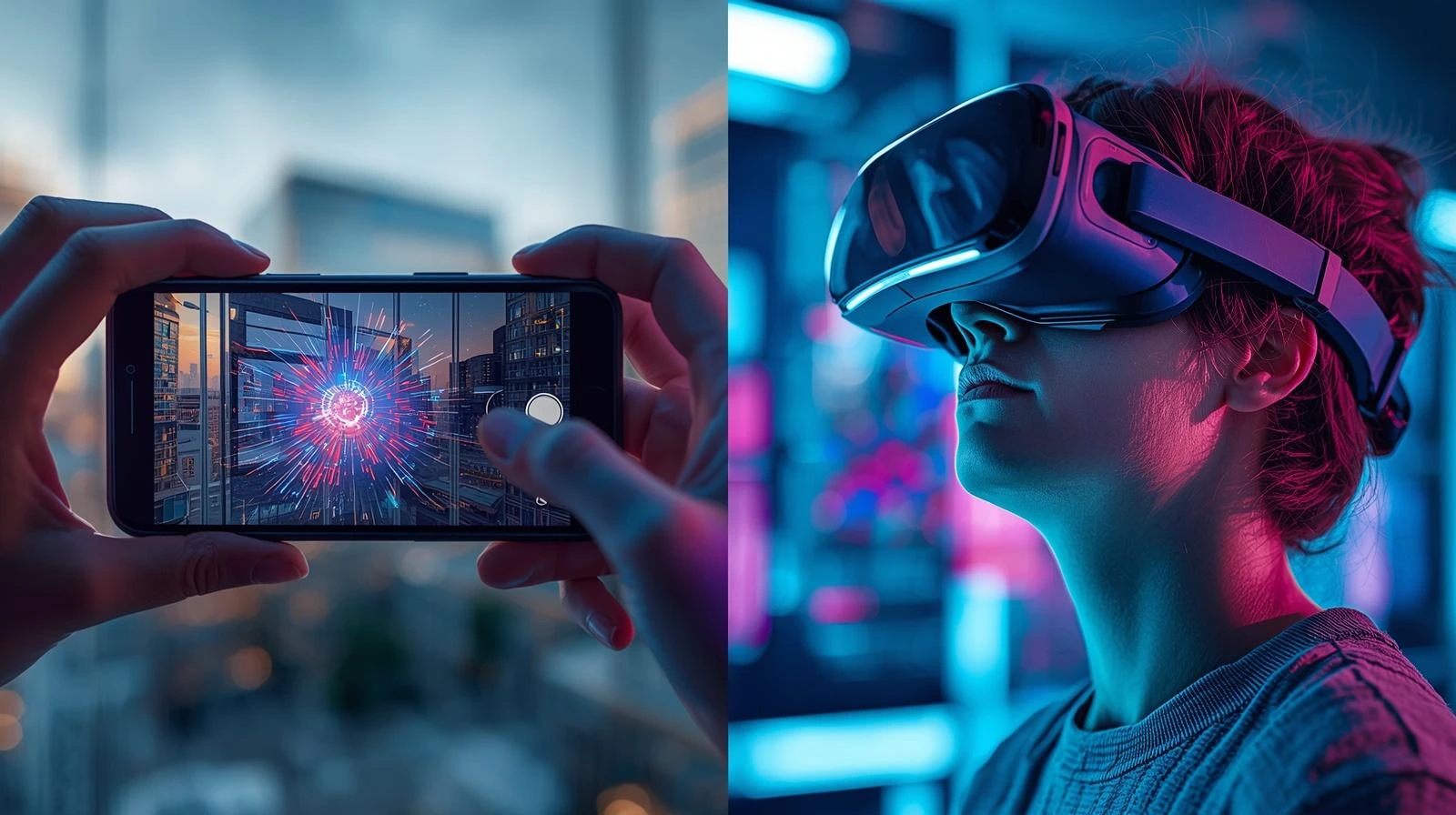
In the digital age we live in, what was considered futuristic technology is a part of our daily lives. One of the most significant innovations shaping this change is AR & VR. From social media filters to virtual game environments to visualising furniture in your own space before making an online purchase, you’re likely familiar with AR & VR without realising it.
So, what makes it so powerful?
AR & VR are short for Augmented Reality and Virtual Reality, respectively, both technologies designed to enhance or totally alter your perception of the world around you. They are often lumped together, but they serve very different purposes. Augmented Reality enhances your existing environment by adding digital elements, while Virtual Reality immerses you in a fully digital world
In this guide, we’ll run through everything you need to know about AR & VR, how it works, where it’s used, the benefits, challenges, and what the future holds. If you are a beginner or want to leverage it for business, this guide will give you a complete understanding in the simplest way possible.
At MyyHashstash, we create cutting-edge interactive digital experiences using AR & VR technologies to help brands engage users in innovative ways
Table Of Contents
- What is AR, and What is VR?
1.1. What is Augmented Reality (AR)?
1.2. What is Virtual Reality (VR)?
- Difference Between AR & VR
- How do AR & VR actually work?
- Real-World Applications of AR & VR
- Future of AR & VR: What’s coming next?
- Conclusion
- FAQs
What is AR and What is VR?
Understanding AR & VR starts with knowing how both technologies function individually.
What is Augmented Reality (AR)?
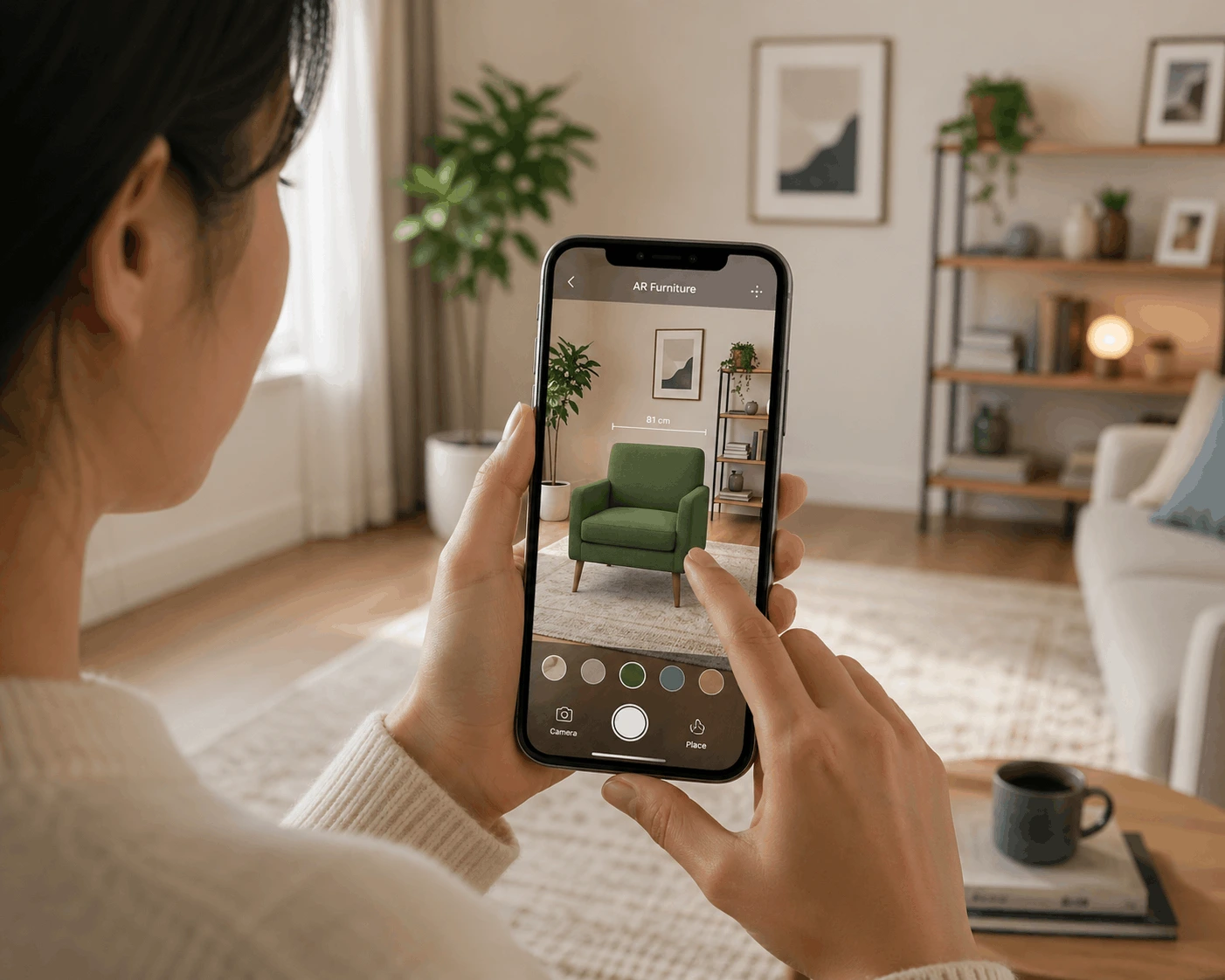
Augmented reality is a technology that overlays computer-generated visuals, sounds, text, or data onto your real-world environment in real time. AR doesn’t take you out of the real world the way a fully simulated experience does. It simply enhances what you see.
Here’s the scenario: You open your IKEA app and hold up your phone to your bedroom floor and a digital sofa pops up right where you’re thinking of placing it. Walk around it, examine it from different angles and decide if it fits your space — all before spending a single rupee. This is the most consumer-friendly type of AR.
- Works using smartphones, tablets, and AR glasses.
- Combines real-world and digital content.
- Provides real-time interaction.
What is Virtual Reality (VR)?
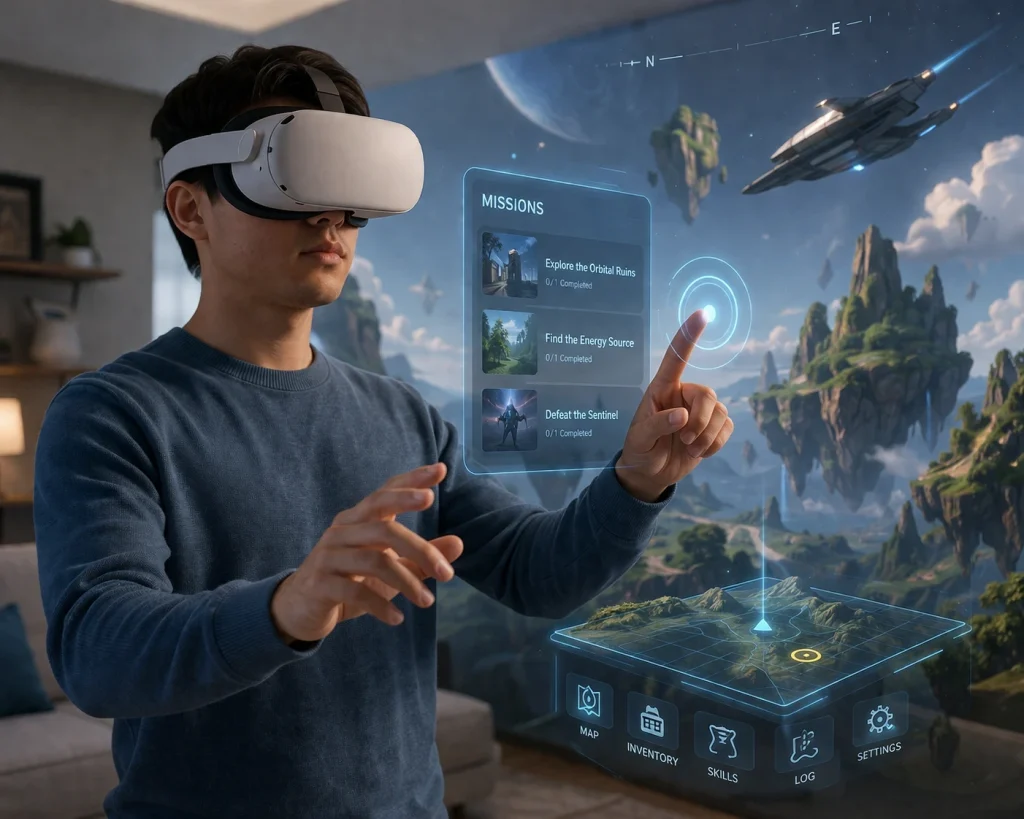
VR ( Virtual Reality ) is an immersive technology that places you in a completely computer-generated environment. You strap on a VR headset, and the real world disappears. Everywhere you look, you see a digital world created specifically for you. In addition, your movements are tracked and displayed in the simulation, giving you a strong sense of presence — the feeling that you are truly “there.”
AR is reality plus, whereas VR is reality minus. It’s the difference between lifting a window to see something new vs walking through a door into an entirely new world.
- Requires VR headsets
- Fully immersive experience
- Blocks out the real world
| Features | Augmented Reality (AR) | Virtual Reality (VR) |
|---|---|---|
|
Environment |
Real World + Digital Overlay |
Fully simulated digital world |
|
User Awareness |
Remains aware of surroundings |
Completely cut off from reality |
|
Primary Use Cases |
Retail, navigation, education, marketing |
Gaming, training, therapy, simulation |
|
Examples |
Snapchat filters, Google Maps AR, IKEA app |
Meta Quest, PlayStation VR, HTC |
How Do AR & VR Actually Work?
Understanding the technology behind AR & VR doesn’t require a computer science degree. At their core, both technologies rely on sensors, processors, displays, and software to create their respective experiences.
How does AR work:
- Camera & Sensors: Capture the real-world environment in real time.
- Computer Vision: Software identifies surfaces, objects and spatial coordinates.
- Digital Overlay: Text or data, 3D models are placed in the scene at the correct perspective.
- Display: The composite image appears on screen or through an optical lens in real-time.
How does VR work:
- Head-Mounted Display (HMD): A close-fitting screen in front of each eye creates the visual field
- Motion Tracking: Gyroscopes and accelerometers track head and body movement
- Rendering Engine: A powerful GPU renders the 3D environment from the user’s exact perspective
- Controllers: Hand controllers or gloves translate physical gestures into virtual interactions
- Spatial Audio: Sound changes dynamically based on the user’s position for added realism
Real-World Applications
One of the most exciting things about AR & VR is that they are no longer just in the world of sci-fi movies and gaming arcades. They have moved significantly into industries where high-stakes decisions, learning, and human experience really matter.
1. Healthcare & Medical
- AR overlays help surgeons visualise veins, organs, and critical structures during operations.
- VR exposure therapy is used to treat PTSD, phobias, and anxiety disorders.
- Medical students practice complex procedures in risk-free VR simulations.
- Pain management programs use VR distraction techniques during procedures.
2. Education & Training
- Students explore ancient civilisations, molecular structures, and the solar system via AR & VR.
- Corporate training programs use VR to simulate high-pressure workplace scenarios.
- Safety drills for fire, earthquakes, and industrial accidents are conducted in VR.
- AR-powered textbooks bring static diagrams to interactive 3D life.
3. Real Estate & Architecture
- Buyers tour unbuilt properties through photorealistic VR walkthroughs.
- Architects use AR to place scale models of buildings on actual construction sites.
- Interior designers offer real-time AR visualisation of furnishing options.
4. Entertainment & Gaming
- VR gaming places players inside the game, delivering unparalleled immersion.
- AR games like Pokémon GO turned city streets into interactive playgrounds.
- Live events and concerts are streamed in 360° VR for remote audiences.
- Theme parks use AR & VR to create layered storytelling experiences.
The Future of AR & VR: What's Coming Next?
The trajectory of AR & VR points firmly upward — not just in market value, but in the sophistication and accessibility of the technology itself. Here are the trends shaping the next chapter:
- Lighter, More Stylish Hardware: The next generation of AR glasses looks more like sunglasses than bulky goggles. Companies like Meta, Samsung, and startups are racing to make wearables truly fashionable.
- AI Integration: Artificial Intelligence is being integrated into AR & VR to create responsive environments that adapt to user behaviour, emotions, and context in real time.
- The Metaverse: AR & VR form the backbone of metaverse platforms — persistent, shared digital spaces where people work, play, and socialise.
- 5G Connectivity: Ultra-low latency networks are enabling cloud-rendered AR & VR experiences that don’t require heavy local hardware processing.
- Haptic Feedback: Advanced gloves and suits that let users feel virtual objects are moving from research labs into commercial availability.
- Enterprise & Industrial Adoption: Manufacturing, logistics, and military applications of AR & VR are scaling rapidly as ROI becomes demonstrably clear.
Final Thoughts:
AR & VR are reshaping how we interact with technology. From enhancing real-world experiences to creating entirely new digital environments, the impact will only grow.
For businesses, adopting AR & VR can lead to better engagement and higher conversions. For users, it means more immersive, interactive, and meaningful experiences.
At Myy Hashstash, we design immersive and interactive experiences that allow brands to connect with their audiences in new and engaging ways. Our AR & VR Development services turn creative ideas into real brand interactions, from augmented reality campaigns to immersive virtual experiences. Learn more about our services and see how AR and VR can bring your brand experience to life.
Frequently Asked Questions :
Q1. What are Augmented Reality & Virtual Reality in simple terms?
Augmented Reality & Virtual Reality are technologies that enhance or simulate reality. AR adds to the real world, while VR creates a virtual one.
Q2. Do I need expensive hardware to use AR & VR?
The future of Augmented Reality & Virtual Reality lies in seamlessly blending the physical and digital worlds. AR is easily accessible on modern smartphones, while VR requires headsets—though affordable options like the Meta Quest 3 are making it more accessible.
Q3. Augmented Reality & Virtual Reality the same as the Metaverse?
Not exactly. AR & VR are technologies; the Metaverse is a concept — a persistent, shared virtual space. AR & VR are the primary tools through which people access and experience the Metaverse.
Q4. What industries benefit most from AR & VR?
Healthcare, real estate, gaming, and education benefit the most from AR & VR.